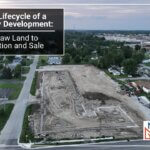
The Full Lifecycle of a Multifamily Development: From Raw Land to Stabilization and Sale


When I first started investing in real estate, I assumed the best opportunities had to be in the “hottest” markets.
The ones everyone talks about.
The ones making the headlines.
Like Florida, Texas, or Arizona.
Boy, was I wrong.
After underwriting deals across multiple states and spending years investing here at home, one thing became clear:
Indiana quietly does a lot of things right.
And for passive investors—especially those who care about stability, predictability, and long-term wealth—that matters more than hype.
Let’s walk through why Indiana deserves serious consideration.

Think of real estate markets like driving styles.
Some states drive fast.
Some drive flashy.
Some hit potholes you never saw coming.
Indiana?
Indiana drives steady.
And steady is exactly what passive investors want. I like to say that Indiana won’t boom or bust. It’s not going to explode in growth like Miami, Florida, but it also most likely won’t experience a serious down turn either.
According to CBRE, Indianapolis, Indiana has experienced a steady increase in rent growth over the last 40 years.

One of Indiana’s biggest advantages is affordability.
Indiana’s overall cost of living consistently runs about 10–12% below the national average, according to data from the U.S. Census Bureau and Council for Community and Economic Research.
Why does that matter?
Because when housing costs stay reasonable, renters can actually afford their payments—even when rents increase modestly.
In many Indiana markets, renters spend roughly 25–28% of household income on rent, compared to 30% or more in many coastal metros. That cushion helps support:
For multifamily syndications, that translates into durable cash flow, not fragile projections.
Here’s something most investors overlook.
Indiana benefits from being in the Midwest.
That means:
Sunbelt states have seen sharp insurance and tax increases over the past few years. Indiana has remained far more stable by comparison.
That stability helps syndication deals pencil without aggressive assumptions—and gives operators more margin for error.
Indiana also benefits from lower construction costs compared to coastal markets, according to national construction cost indices tracked by RSMeans and the U.S. Bureau of Labor Statistics.
Why does that matter to you as a passive investor?
Newer or recently built assets typically offer:
In other words, fewer headaches and more predictability.
Indiana doesn’t grow the way headline markets do—and that’s not a bad thing.
Instead of explosive population spikes, Indiana grows through:
Indiana’s rental demand is supported by a diverse employer base, not a single boom-and-bust industry. Major employers include Eli Lilly and Company, Elevance Health (formerly Anthem), Cummins Inc., Indiana University Health, and Purdue University, along with large national employers like Walmart. This mix of healthcare, life sciences, manufacturing, logistics, education, and corporate employment helps create stable, diversified renter demand across Indiana markets, reducing reliance on any single employer or sector.
According to the U.S. Census Bureau, Indiana experiences low out-migration and steady household formation, which supports long-term rental demand without attracting massive speculative overbuilding.
For multifamily investors, slower, steadier growth often beats boom-and-bust cycles.
Another underappreciated strength of Indiana is measured multifamily supply growth.
Compared to many high-growth Sunbelt metros, Indiana markets have generally avoided large waves of speculative apartment construction. Industry data from CoStar and Yardi Matrix shows Indiana’s new supply coming online at a more controlled pace.
That helps protect:
Oversupply kills returns. Indiana has largely avoided that trap.
Let’s be honest.
You’re not investing to manage tenants.
You’re not investing to watch construction schedules.
You’re investing to:
Indiana aligns well with that mindset.
Multifamily assets here often trade at cap rates 100–200 basis points higher than comparable properties in major coastal markets. That spread provides:
That’s exactly what many passive investors are looking for.
Real estate is local.
Investing in syndications should be too.
Knowing:
…makes a real difference.
Local Indiana operators have a meaningful advantage over national firms trying to “parachute in.” That local insight often shows up in better underwriting, smarter site selection, and fewer surprises after the deal closes.
Okay, pause for a second.
No investment is risk-free.
Indiana real estate investments still carry:
The difference is that Indiana deals are typically underwritten conservatively, using realistic rent growth and expense assumptions—not hope.
That discipline matters more than ever.
At Goodin Development, we invest exclusively in Indiana. That focus is intentional. We believe the best outcomes for passive investors come from deep local knowledge, not spreading attention across dozens of markets.
By concentrating solely on Indiana, we stay close to our projects, maintain strong relationships with local municipalities and partners, and underwrite deals based on real, on the ground insight rather than assumptions pulled from a spreadsheet.
Our philosophy is simple. Know the market. Stay disciplined. Invest where fundamentals, not hype, drive results.
Indiana isn’t for investors chasing headlines.
It’s for investors who value:
If that sounds like you, Indiana deserves a serious look.
If you want to learn about how you can invest in real estate, without the headaches, in Indiana, apply to join our investor community.